How can we make a new child’s transition to daycare gradual and successful?
A gradual daycare transition is built with the family, predictable goodbyes and a pace suited to the child—there is no universal timetable for every child.
The short answer
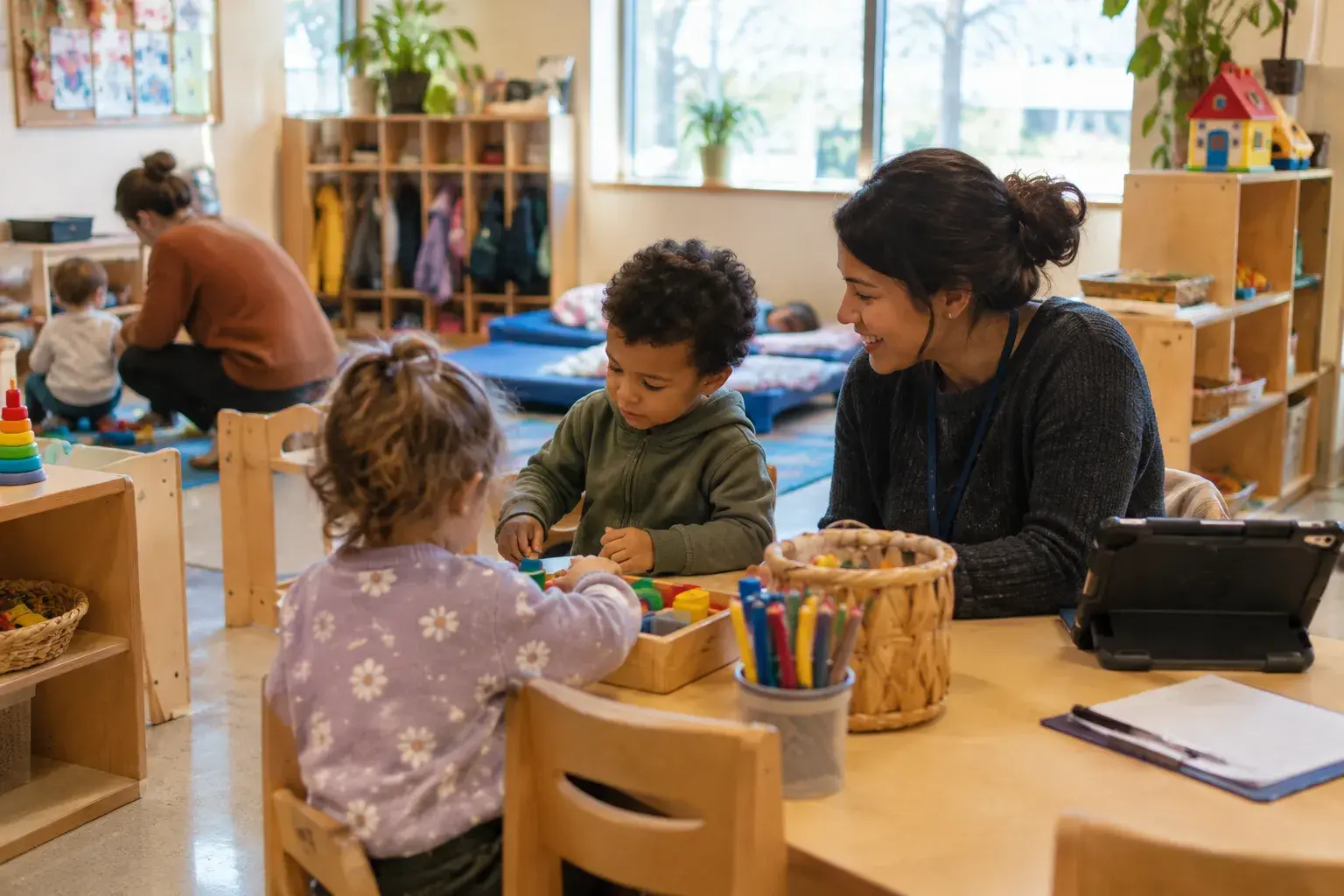
A gradual transition is a way for the child and family to get to know the childcare centre step by step, rather than expecting everything to feel easy on the first day. The pace is decided together with the parent, taking into account the child’s needs, the family’s circumstances and the group’s routine. There is no universal timetable that works for every child.
In Quebec, the educational program Accueillir la petite enfance describes one possible progression: the child first visits with their parent for periods that gradually get longer, and then the parent leaves for increasing lengths of time. The Ministry notes that the time needed varies for each child and family. Its guide for parents also recommends, when possible, beginning with a few hours and increasing the length of the visit over the following days. These are helpful reference points, not a regulatory duration to impose. (Quebec educational program)
Before the child arrives: plan a realistic welcome
A transition begins before the child walks into the room. A conversation with the family helps the team learn what is familiar to the child and avoids having to discover everything in the middle of a busy day. Set aside a calm moment to discuss the child’s routines and agree on how you will communicate during the first few days.
You could ask the parent:
- “What helps your child feel comfortable with someone new?”
- “What words do you use for meals, naps or diaper changes?”
- “What are goodbyes usually like?”
- “Is there a familiar routine or item we should know about?”
- “What is the best way to communicate with you during the day?”
Show the family the room, the adults, the spaces the child will use and the key parts of the day. If it is possible and works with the group’s activities, offer a visit with the child and parent. Quebec’s educational program emphasizes working in partnership with parents and adapting schedules to children’s rhythms. (Quebec educational program overview)
Record useful information using the tools approved by your organization and follow its confidentiality practices. Distinguish between what the family tells you and what you observe yourself: “The parent says that…” and “In the room, we observed that…”. This makes it easier to have a specific conversation without turning one reaction into a lasting conclusion about the child.
During the first few days: make routines predictable
Work with the family to create a simple, flexible plan. It might include visits with the parent, a short period when the parent steps away, and then longer visits. The plan should be able to change: a child may be comfortable playing but need more support at mealtime or nap time.
Before each step, agree on who will welcome the child, how long the parent will stay, how they will say goodbye, who will contact the family and when you will check in. Offer a phrase the parent can use consistently: “I’m leaving now. [Name] is going to take care of you. I’ll be back after snack.” Choose a reference point the child can understand within the centre’s actual routine.
Avoid stretching out the goodbye without explanation or leaving without telling the child. A warm, brief and consistent goodbye helps the child understand what is happening. Acknowledge tears without dismissing them: “You wanted Dad to stay. I’m here with you.” Then offer your presence and an accessible activity, without expecting the child to join in right away.
Adapt your invitations to the child’s age and cues. They might watch the group while being held by the early childhood educator, explore a toy near their parent or join a small part of a routine. For an infant, care routines, a familiar voice and predictable transitions can also help build a relationship. Continue to follow the supervision, safety and ratio requirements that apply to your centre; the transition does not replace them. Consult Quebec’s Regulation respecting childcare services.
Observe, communicate and adjust together
After each visit, share concrete details with the parent: what interested the child, which moments were harder, what strategies you tried and what seemed to help. For example: “Today, Léa explored the blocks with me. She cried when her parent left, then agreed to sit beside me during the song.” Avoid vague updates such as “It went well” when the family is trying to understand how the day unfolded.
Ask the parent what they noticed at home, too. The Ministry’s guide encourages families to share their observations and pay attention to the child’s reactions during this period. Keep the conversation non-judgmental: adjustment can take changes to the plan, and one day does not sum up the child’s whole experience. (Quebec Ministry guide for parents)
If the child seems overwhelmed, revisit the plan with the parent. You could temporarily shorten one step, offer more closeness, choose a different point in the routine or keep visits the same length for a while before extending them. Do not promise a date by which the transition will be “complete.” Instead, agree on the next check-in and what you will observe before then.
If a concern involves the child’s health, follow your childcare centre’s policy and contact the parent. For a non-urgent health question in Quebec, the family can call Health811. In an emergency, call 911. Early childhood educators do not need to diagnose. (Quebec Health811)
Stay the course without following a formula
For the team, a successful transition does not necessarily mean an entry without tears. It is a process in which the child is welcomed warmly, the adults communicate and the steps can be adjusted. Plan who will be available to welcome the new child while also supervising the rest of the group and meeting applicable requirements.
Ontario offers a useful example, but it is separate from Quebec’s framework: its page for families suggests starting gradually and gives an example of about one hour on the first day, followed by longer periods. This is a practical example published by Ontario—not a Quebec rule or a duration to transfer automatically. Ontario’s legal requirements are set out in the Child Care and Early Years Act, 2014 and its regulations; they do not replace Quebec’s rules. (Ontario: How to prepare your child for child care)
Key takeaway: prepare the welcome with the family, make departures and returns clear, observe without labelling, and adjust the plan together. A strong relationship and consistency among the adults matter more than following a fixed number of days.
Frequently asked questions
How long does a gradual transition take?
There is no universal timeline. Quebec’s educational program says the time needed varies from one child and family to another.
Can a parent stay in the room?
Agree on the arrangements in advance with the director and early childhood educator. A short, planned visit may help some children, while the group’s routine and the centre’s organization must also be considered.
Should we start with short days?
That is one option, not a general rule. In Quebec, the Ministry recommends a gradual, step-by-step approach when possible; work out the plan with the family.
What should we do if the child cries at drop-off?
Acknowledge the child’s feelings, keep the goodbye routine predictable and communicate with the parent as agreed. For a health concern, follow your centre’s policy and direct the family to Health811; in an emergency, call 911.
This article is for information; it does not replace advice from a health professional. In Québec, call Info-Santé 811 when in doubt (elsewhere in Canada, your provincial health line). In an emergency, call 911.
Sources
- Accueillir la petite enfance – Programme éducatif pour les services de garde éducatifs à l’enfance (in French), Ministère de la Famille, Gouvernement du Québec
- How to prepare your child for child care, Gouvernement de l’Ontario
- Child Care and Early Years Act, 2014, Gouvernement de l’Ontario
- Info-Santé 811 (in French), Gouvernement du Québec