Maliah Classes · Special needs and autism
Autistic children and children with special needs, welcomed in your group
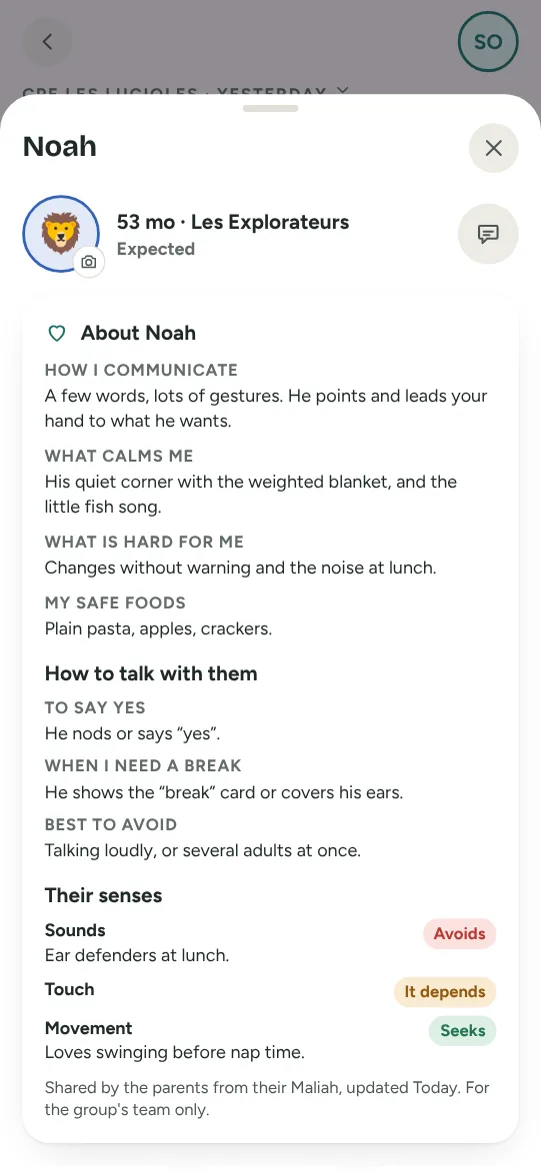
The family shares from Maliah what helps their child: how they communicate, what calms them, what’s hard for them, their senses. The group’s team finds it on the child’s card, and never sees a diagnosis.


- Essentials free forever
- No ads
- Hosted in Canada
- iPhone · Android · tablet · web
- 10 languages
What it does
- “About” the child, written by their parents: how they communicate, what calms them, what’s hard for them, their senses, their safe foods and anything else to know.
- Their communication card: how they say yes or no, ask for help or a break, their words, signs and pictures, and what’s best to avoid.
- Their sensory profile, sense by sense (sounds, sight, touch, taste and textures, smells, movement, pressure on the body, body signals): seeks, avoids or it depends, with a note.
- Everything is on the child’s card, next to allergies and the emergency card, with the date of the last update. A substitute reads it in a minute.
- Never the diagnosis or the word “autism”: only what helps the team. The family chooses to share and can stop whenever they want.
- The daily log, daily report and private messages cover the rest: say what went well, let the family know about a busier day.
0 diagnoses
shown to the team: only what helps
8 senses
in the sensory profile
Any time
the family can stop sharing
Before and after
Before
- An intake sheet filled in by hand, filed in a binder.
- The substitute meeting the child knowing nothing.
- What calms them, said in a rush at the door.
Maliah Classes
- What helps the child, on their card, written by their parents.
- The whole team reads it, even the substitute.
- Kept up to date by the family, with the date.
How it works
- The family fills in “About”, the communication card and sensory profile for their child in Maliah.
- They choose to share them with the daycare, in Family → Daycare.
- The group’s team finds them on the child’s card, always up to date.
For everyone
The director
Welcomes the child with more peace of mind: what helps is on their card from day one, for the whole team and substitutes.
The educator
Knows how to talk to the child, what calms them and what they avoid, even before their first day.
The parent
Writes once what helps their child, updates it as they grow, and chooses what the daycare sees.
Frequently asked questions
Does the child need a diagnosis?
No. Whether the child is diagnosed, being evaluated, or the family simply has questions, they share what helps. The team never sees the status or the diagnosis.
Who sees this information?
The daycare’s team, on the child’s card. Nothing is shared without the family’s consent, and they can stop sharing at any time in Maliah (Family → Daycare).
Does it replace an inclusion plan or support program?
No. Maliah Classes doesn’t replace any evaluation, plan or program: in Québec, the allowance for integrating a child with a disability and its integration plan; elsewhere in Canada, your province’s inclusion support program; in the United States, the IFSP or IEP. It keeps what the family shares at hand, every day.
Does the app give advice or therapy?
No. Maliah Classes makes no diagnosis, recommends no therapy and gives no medical advice. It passes on what parents know about their child.
Is the paid plan needed?
No. Reading what the family shares is part of Maliah Classes’ free essentials. On the parents’ side, “About” is free; the communication card and sensory profile are part of Maliah Plus.
Other features
 Attendance and ratios
 Ratios by place
 Daily log
 Dictate the journal
 Daily report
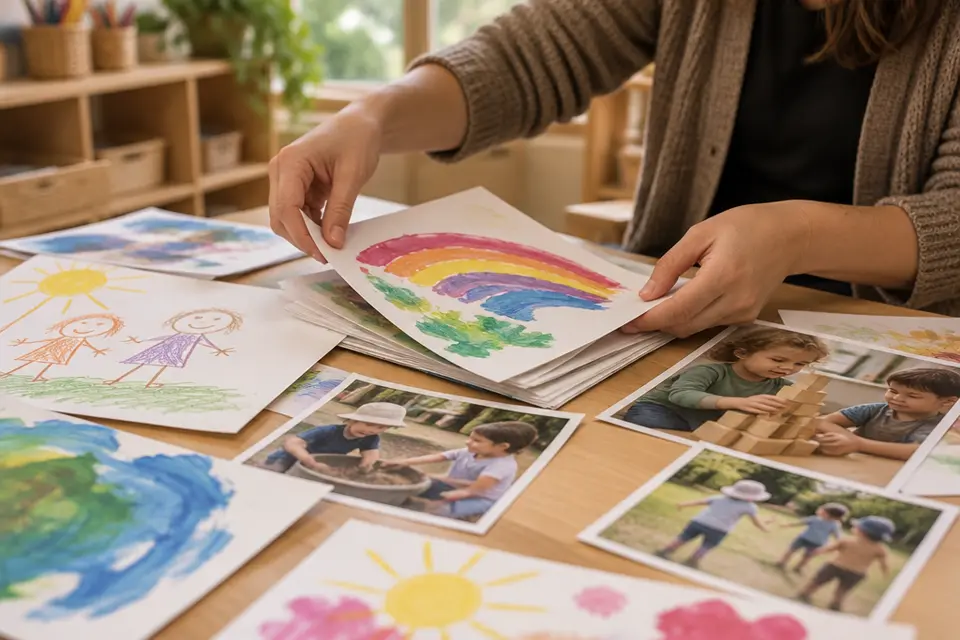 Portfolio and portrait
 Parent communication
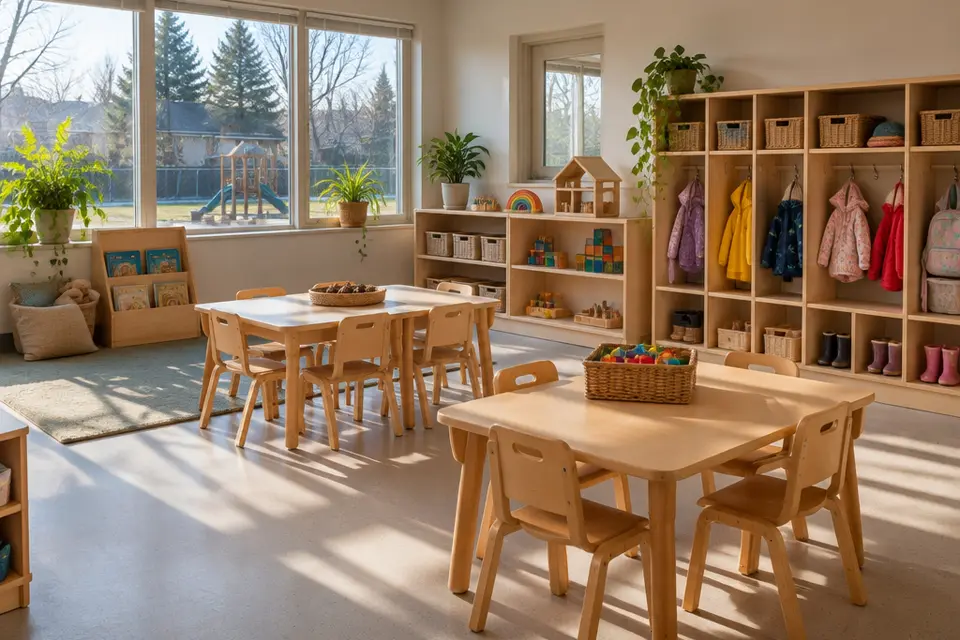 Groups and spots
 Enrolment and families
 Team and tablet
 Billing and payments
 Tax receipts
 Sign-in at the door
 Attendance sheet
 Waitlist
 Schedules and time clock
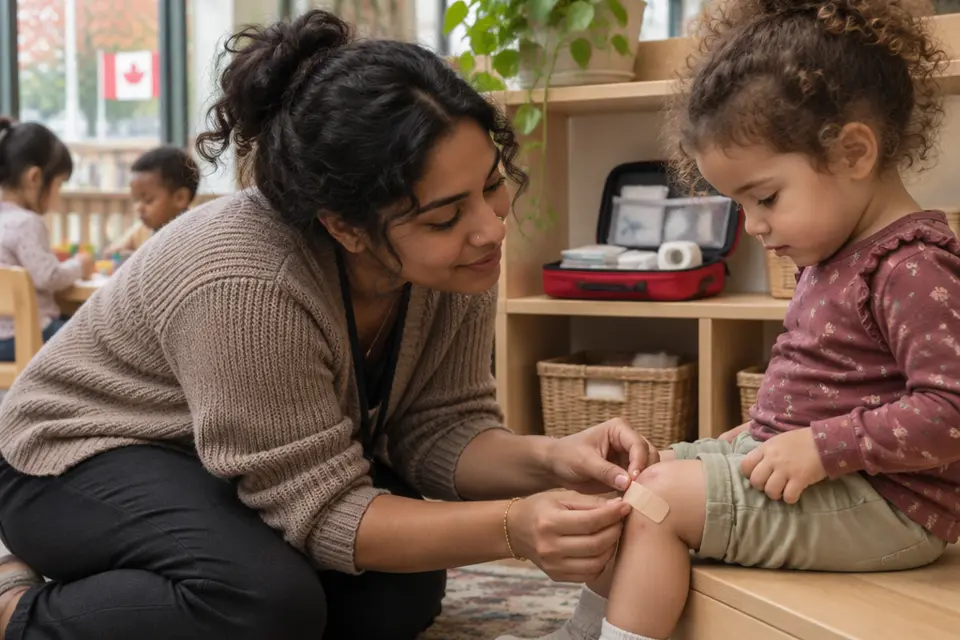 Incidents, emergency and medication
 Calendar and menu
Free to start
Try it with your team tomorrow morning
The essentials are free for the whole team, and the plan has a 30-day free trial, on phone, tablet and computer.