How can I stop two people from giving my child the same medicine?
One shared log helps everyone know what medicine was given, by whom, and when. If a double dose may have happened, call the poison centre right away.
The short answer
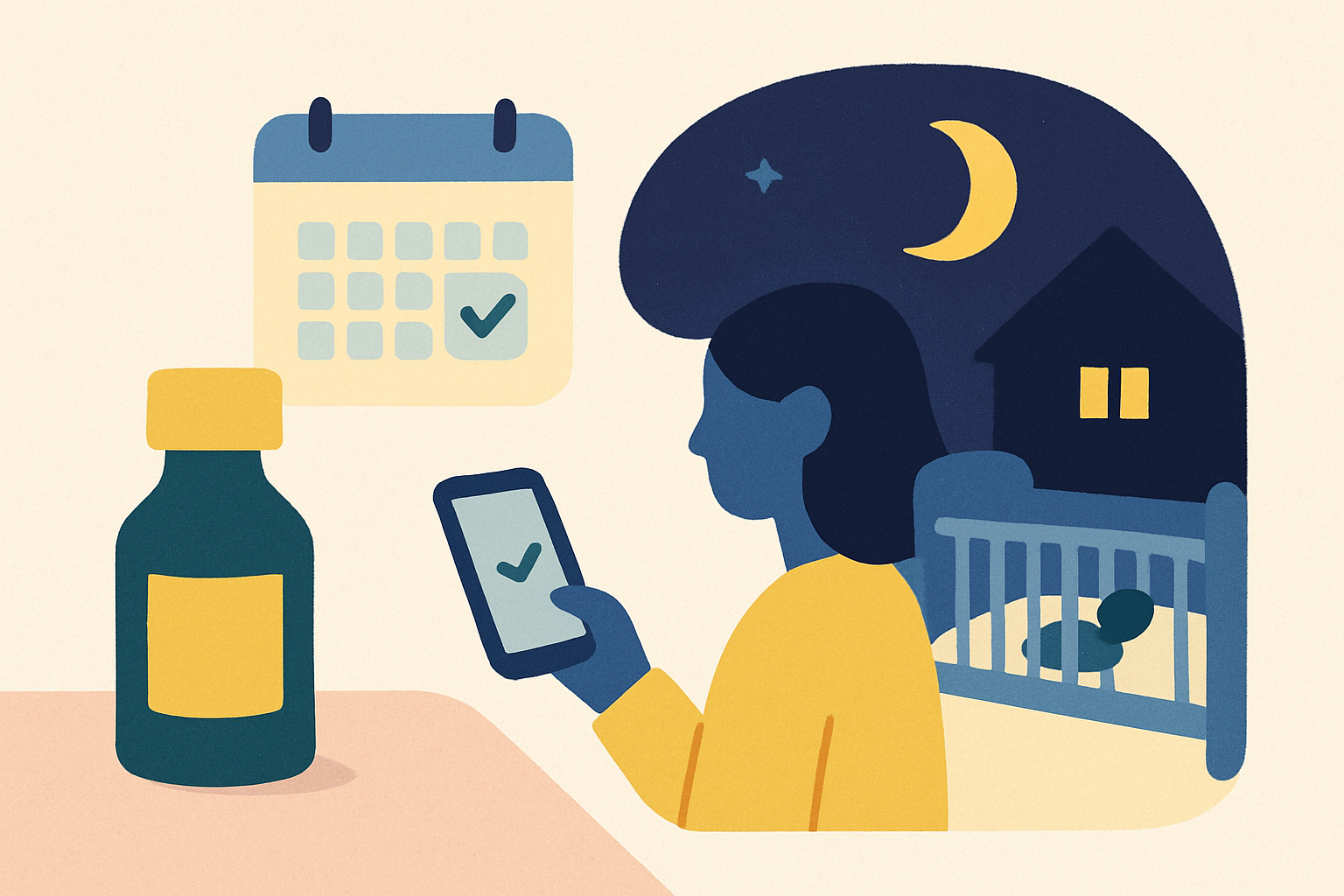
When several adults care for a child, everyone needs to be able to check the same information before giving medicine. Record the product’s name, the amount given, the time, and who gave it right away. Then make sure the other caregivers know where to find that record.
If you are not sure whether a dose has already been given, do not guess or give another dose “just in case.” Ask a pharmacist or call Health811 for advice. If your child may have received a double dose or too much medicine, call the Quebec Poison Control Centre at 1-800-463-5060 right away. In an emergency, call 911.
Why do double doses happen?
The risk often comes up when one caregiver takes over from another: one parent leaves and the other arrives, a babysitter starts their shift, or a grandparent helps during a busy day. Everyone is trying to help, but a question like “Did you give them their medicine?” may not get a clear answer.
There can also be confusion between products. The same ingredient may be found in more than one medicine, sometimes under different brand names. Health Canada recommends checking what other people caring for a child have given to help prevent an accidental repeat dose. The Canadian Paediatric Society also advises reading labels to check whether an ingredient is present in more than one product.
This does not mean you should stop a treatment or change how a medicine is given. For questions about prescription or over-the-counter medicine, check the prescription instructions and the label. If anything is unclear, ask a pharmacist.
One simple routine for the whole family
Choose one way to keep track that every caregiver can easily check: a notebook kept in an agreed-upon place, a shared phone note, or a tracking app. Try not to rely only on memory or on messages scattered across different conversations.
After each time medicine is given, record:
- the medicine’s name, as it appears on the package;
- the amount given, using the information on the label or prescription;
- the time it was given;
- the name or initials of the person who gave it; and
- any useful detail, such as whether your child spit it out or whether a professional gave a specific instruction.
The Institut national de santé publique du Québec (INSPQ) recommends recording the medicine, time, and amount given. Health Canada also advises checking what other people caring for the child have administered. A written log keeps these details together in one place.
Before giving medicine, check the log and confirm you have the right product. If information is missing or seems inconsistent, pause. Contact the other caregiver, then ask a pharmacist or call Health811 if you are still unsure. Do not decide based on an assumption.
Preparing handoffs with babysitters and relatives
A brief conversation before you leave can prevent misunderstandings. Show the person taking over where the log is and how to record a dose. Ask them to let you know if they give medicine, even if they followed the usual instructions.
To make handoffs easier, you can agree on a few simple rules:
- one person checks the log just before the medicine is given;
- the person who gives it records it right away, not later;
- the next caregiver checks the log instead of relying on memory; and
- if anyone is unsure, no one gives an extra dose before getting appropriate advice.
Keep medicines in their original containers and store them out of children’s sight and reach. The INSPQ also recommends keeping child-resistant caps on and storing medicines somewhere children cannot access. A clear routine can help prevent double doses and keep medicines safely stored.
If a dose may have been given twice
Do not wait for your child to develop symptoms before asking for advice. Call the Quebec Poison Control Centre at 1-800-463-5060 promptly and follow the staff’s instructions. Health Canada advises contacting a poison centre after an accidental overdose. In Quebec, the Poison Control Centre can guide you based on the situation.
If you can, have the medicine container and your notes ready: the product’s name, the amount that may have been given, the times involved, and your child’s age. Do not make your child vomit or give another medicine to “make up for it” unless a health professional tells you to.
If your child appears to be in distress, is unconscious, or is having trouble breathing, call 911. If it is not an emergency but you have a health question, call Health811. For help with how to give a medicine or to clarify an instruction, contact your pharmacist. A written log helps you share the facts, but it does not replace professional advice.
General recommendations cannot determine what to do for every medicine or situation. Instructions can vary depending on the product and the child. If two sources seem to disagree, do not try to settle it on your own: ask a pharmacist or call Health811. If a dose may have been repeated, contact the Quebec Poison Control Centre.
Frequently asked questions
What should I do if two people may have given the same medicine?
Call the Quebec Poison Control Centre at 1-800-463-5060 right away for advice. If your child is in distress or it is an emergency, call 911.
What should I record after giving medicine?
Write down the medicine’s name, the amount given, the time, and who gave it. Keep the package nearby.
Is a text enough to tell the other parent?
A text can help, but one shared log that everyone can check can reduce missed messages and forgotten details.
Who should I call if I’m not sure whether a dose was given?
For questions about giving a medicine, ask your pharmacist or call Health811. If a double dose may have been given, call the poison centre.
This article is for information; it does not replace advice from a health professional. In Québec, call Info-Santé 811 when in doubt (elsewhere in Canada, your provincial health line). In an emergency, call 911.
Sources
- Safe use of medication for children, Santé Canada
- Using over-the-counter drugs to treat cold symptoms, Société canadienne de pédiatrie — Soins de nos enfants
- Info-Santé 811, Gouvernement du Québec
- Problems associated with alcohol consumption and drug use, Gouvernement du Québec