Key milestones
When do babies start laughing?
The first chuckle comes around four months and real belly laughs around six months. Here is how laughing develops, games that bring it out and what it says about your baby’s development.
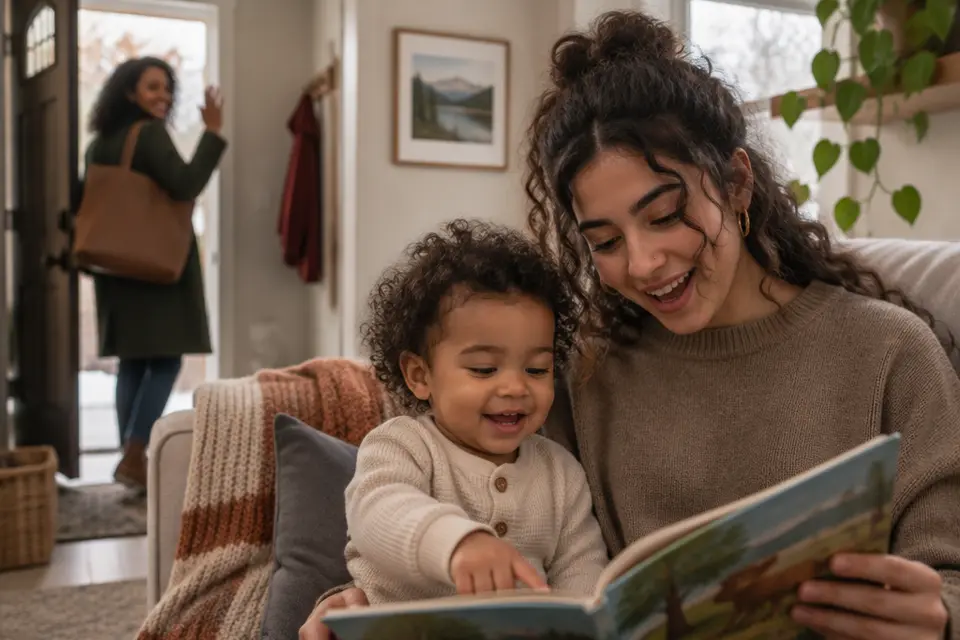
At what age do babies laugh?
According to the CDC “Learn the Signs. Act Early” checklist, at four months most babies chuckle, not yet a full laugh, when you try to make them laugh. At six months they laugh out loud. The INSPQ says that between four and six months babies laugh often and seek the company of the person who cares for them.
How laughing develops
Laughing follows smiling, and becomes more and more linked to play and surprise.
- Second month: social smile in response to your face.
- Around 4 months: chuckles when you play together.
- Around 6 months: laughs out loud, likes looking in the mirror.
- Around 9 months: smiles or laughs at peek-a-boo.
- Around 12 months: plays games with you, like pat-a-cake.
- Around 15 months: claps when excited.
Games to make your baby laugh
The INSPQ suggests gentle tickles during awake periods from two to four months, then peek-a-boo games around six months.
- Gentle tickles on the tummy or feet.
- Peek-a-boo behind your hands or a blanket.
- Funny mouth noises, repeated if they laugh.
- “I’m going to get you” with slowly approaching hands.
- Knocking down a block tower together.
Reading your baby’s signals
A laughing baby invites you to keep going; a baby who turns away, squirms or fusses is saying they need a break. Respecting those signals teaches them their messages matter. Stop tickling as soon as they seem to have had enough.
When should you talk to a professional?
According to the CDC checklist, it is worth raising if your baby doesn’t chuckle around four months or laugh around six months, especially if they smile little or seek little contact.
Every child develops at their own pace, and a gap of a few weeks is common. If something worries you, if your child loses a skill they had, or is not yet doing what most children their age do, don’t wait: talk to their doctor or nurse. In Québec, your CLSC access desk can register your child for an Agir tôt screening without a referral, and Info-Santé 811 answers questions.
What is worth noting in Maliah
The first belly laugh deserves a dated note in Maliah that grandparents can see too: a small moment you will love finding again later.
In Maliah, feeds, sleep and diapers are logged in two taps or by voice, and the whole family sees the same entries, each with its author and time. Before an appointment, the summary for the doctor gathers what was noted since the last visit.
Frequently asked questions
When do babies first laugh?
According to the CDC, around four months most babies chuckle when you play with them. Real belly laughs arrive around six months.
My 4 month old isn’t laughing. Is that normal?
Every baby has their own pace. The chuckle is a four-month milestone and laughing out loud a six-month one. If your baby smiles little or doesn’t seek contact, talk to their doctor.
How do I make my baby laugh?
Gentle tickles, peek-a-boo, funny noises and games where your hands approach slowly often make babies laugh.
Can you tickle a baby too much?
Yes. If they turn away, squirm or fuss, they need a break. Stop as soon as they seem to have had enough.
Read next
- When do babies smile for the first time?
- 4 month old milestones
- 6 month old milestones
- When do babies start talking?
Related free tools
Other guides
Sources : CDC, Learn the Signs. Act Early : listes de repères (révision 2022) · CDC : 2 months · CDC : 4 months · CDC : 6 months · CDC : 9 months · CDC : 1 year · CDC : 15 months · CDC : 18 months · CDC : 2 years · CDC : 3 years · CDC : 4 years · CDC : 5 years · INSPQ, Mieux vivre : Étapes du développement de l’enfant · INSPQ, Mieux vivre : Activités pour soutenir le développement de l’enfant · INSPQ, Mieux vivre : Vous avez des questions sur le développement de votre enfant ? · INSPQ, Mieux vivre : Apprentissage de la propreté · INSPQ, Mieux vivre : Dents de bébé · INSPQ, Mieux vivre : Prévention de la tête plate · Société canadienne de pédiatrie, Soins de nos enfants : Toilet learning · Santé Canada : produits de consommation interdits au Canada (dont les marchettes pour bébés) · Québec.ca : Dépistage de la surdité chez les nouveau-nés
Worried about your child’s health or your pregnancy? In Québec, Info-Santé 811 answers day and night; elsewhere, call your local health line. In an emergency, call 911. This article is for information; it does not replace advice from a health professional. In Québec, call Info-Santé 811 when in doubt (elsewhere in Canada, your provincial health line). In an emergency, call 911. Updated on November 7, 2026.