Feeding schedule by age
2 year old feeding schedule: meals, milk and new foods
At two, children eat family meals and voice their preferences. They may be wary of new foods, and that is a normal stage. Here are the Health Canada and INSPQ markers to support them.
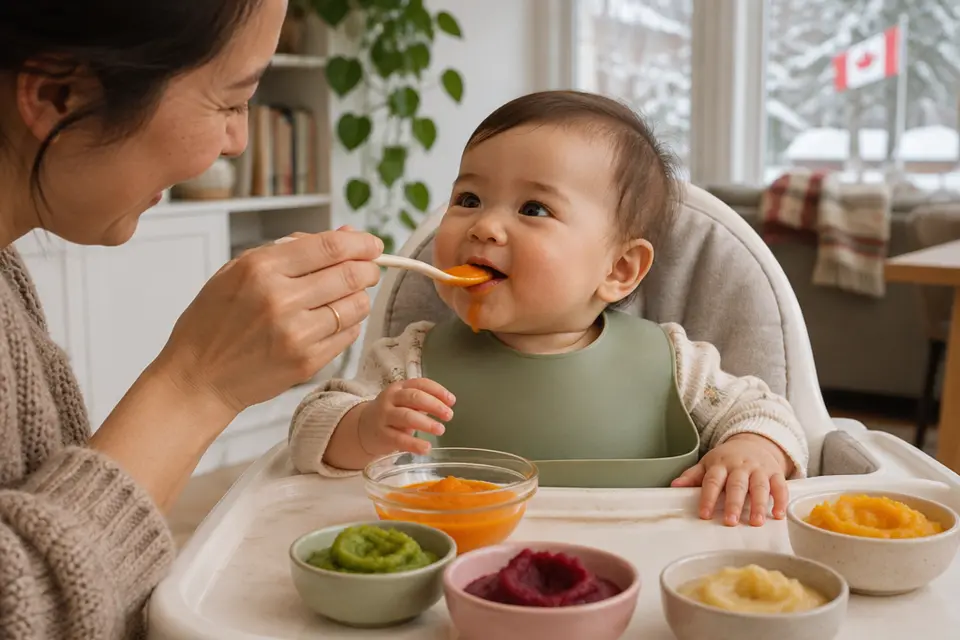
What does a 2 year old eat?
At two, children share family meals. Canada’s Food Guide applies: plenty of vegetables and fruit, protein foods including plant-based ones, and whole grain foods, with water as the drink of choice. Three meals and two or three snacks at regular times suit most children.
Which milk at 2 years?
Health Canada doesn’t routinely recommend skim, 1% or 2% milk before age two; from this age it can replace whole milk, depending on your family’s habits. Keep milk moderate to leave room for other iron-rich foods. Breastfeeding can continue beyond two years if you and your child wish, as Health Canada and the WHO support. For plant-based beverages, ask your doctor or a dietitian.
My 2 year old refuses new foods
Wariness of new foods is common at this age. The INSPQ notes a food may need to be offered about ten times, or more, before it’s accepted. A few ideas:
- serve a small piece of the new food next to familiar ones;
- eat the same food in front of your child, without comment;
- let them touch, smell or spit it out without scolding;
- avoid bribes and dessert as a reward;
- invite them to wash vegetables or toss the salad.
Choking: still careful until age 4
According to the INSPQ, some foods remain a choking risk until age four: peanuts and other whole nuts, seeds, popcorn, hard candy and lozenges, gum, whole fresh grapes and raisins, sausage rounds, raw carrot and celery. Cut grapes into quarters, grate hard raw fruit and vegetables, remove pits and bones, and always have your child eat sitting down, supervised by an adult.
Example day (adapt to your child)
One example among many; a two-year-old’s appetite varies from meal to meal.
- Breakfast: whole grain toast with a thin layer of peanut butter, fruit; milk.
- Snack: soft-cooked or grated vegetables and hummus.
- Lunch: hearty lentil soup, bread, cheese; water.
- Snack: plain yogurt and cut-up berries.
- Supper: fish, quinoa, vegetables; water or milk.
What is worth noting in Maliah
Foods tasted, refused and later accepted are easy to find when logged over the weeks. In Maliah, a feed, a meal or a diaper is logged in two taps or by voice, with the time and the name of whoever logged it. The whole family sees the same log, and a summary of the last few days is ready for the visit with the doctor or nurse.
Frequently asked questions
Can a 2 year old drink 2% milk?
Yes. Health Canada says skim, 1% or 2% milk isn’t routinely recommended before two; from age two it can be offered.
My 2 year old won’t eat vegetables: what can I do?
Keep offering them without pressure, in different forms, and eat them in front of your child. Many tries are often needed before a food is accepted.
Are nuts OK at 2 years?
Whole nuts remain a choking risk until age four. A thin layer of nut butter or ground nuts in a dish are safer.
Read next
- 18 month old feeding schedule: meals, appetite and independence
- 12 month old feeding schedule: meals, milk and the open cup
- Weaning from breastfeeding: when and how to stop gently
- When can babies eat nuts? Allergy and choking safety
Related free tools
Other guides
Sources : INSPQ : Mieux vivre avec notre enfant de la grossesse à deux ans (guide 2026) · INSPQ, Mieux vivre : Quand introduire les aliments ? · INSPQ, Mieux vivre : Comment introduire les aliments ? · INSPQ, Mieux vivre : Diversification alimentaire menée par l’enfant (DME) · INSPQ, Mieux vivre : Risques d’étouffement, à surveiller jusqu’à 4 ans · INSPQ, Mieux vivre : Allergies alimentaires chez l’enfant · INSPQ, Mieux vivre : Bases d’une tétée · INSPQ, Mieux vivre : Manipulation du lait exprimé · INSPQ, Mieux vivre : Tiédir le lait · INSPQ, Mieux vivre : Sevrage de l’allaitement · INSPQ, Mieux vivre : Rots, régurgitations, hoquet et gaz · Santé Canada : Nutrition du nourrisson né à terme et en santé, de 6 à 24 mois · Santé Canada : Nutrition du nourrisson né à terme et en santé, de la naissance à 6 mois · Santé Canada : Allergies alimentaires (allergènes prioritaires) · Santé Canada : Le mercure dans le poisson · Société canadienne de pédiatrie (Soins de nos enfants) : Nourrir votre bébé pendant la première année · Guide alimentaire canadien · Organisation mondiale de la santé : Allaitement
Worried about your child’s health or your pregnancy? In Québec, Info-Santé 811 answers day and night; elsewhere, call your local health line. In an emergency, call 911. This article is for information; it does not replace advice from a health professional. In Québec, call Info-Santé 811 when in doubt (elsewhere in Canada, your provincial health line). In an emergency, call 911. Updated on November 7, 2026.