When can babies eat…
When can babies eat wheat: bread, pasta and cereal?
Wheat is one of Canada’s priority allergens, and it is worth introducing early, around six months, like other foods. Here is which forms to offer by age and which signs to watch for, according to the INSPQ and the Canadian Paediatric Society.
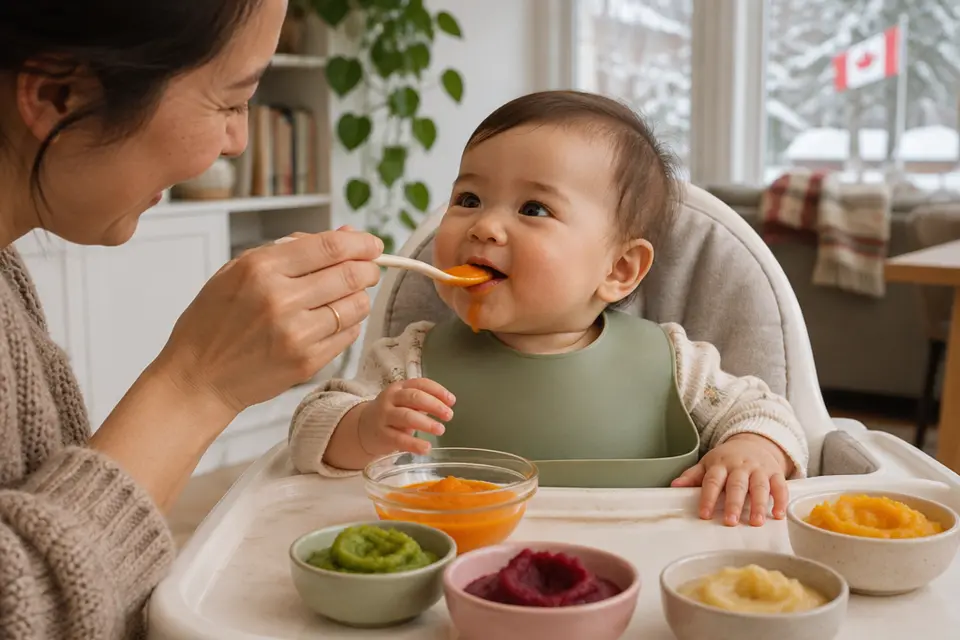
At what age can babies have wheat?
Around six months, when your baby is ready to eat. The INSPQ recommends introducing common allergens alongside other foods, without delay, and Health Canada lists wheat and triticale among priority food allergens. There is no benefit in waiting until one year for bread or pasta.
Why offer it early and regularly?
As with egg or peanut, the Canadian Paediatric Society advises continuing to offer a food regularly once tolerated. Wheat is also a handy iron source when given as iron-fortified infant cereal. Whole grain products add fibre.
Which forms of wheat by age?
Choose simple products with no added salt or sugar when possible.
- Around 6 months: iron-fortified wheat or multigrain infant cereal; very soft cooked pasta, mashed; fine couscous mixed into a purée.
- Around 6 months, baby-led: strips of whole grain toast, plain or spread with a purée; large well-cooked pasta (fusilli, penne).
- 9 to 12 months: small pasta, lightly sweetened homemade pancakes or muffins, pieces of bread.
- Avoid big pieces of soft bread that form a sticky ball; toasting makes it safer.
What reaction signs should I watch for?
After offering wheat for the first time, watch your baby over the next few hours. According to the INSPQ, a fast reaction usually happens within minutes to two hours after the food. Call 911 if your child has red patches on the skin and one or more of these signs:
- a rapid change in general condition: irritability, drowsiness, loss of consciousness;
- swelling of the lips or tongue;
- difficulty breathing;
- sudden vomiting.
- For a milder reaction, stop the food and talk to your doctor, or call a health line (Info-Santé 811 in Québec).
What is worth noting in Maliah
Logging the first wheat meal, and each time it comes back, shows at a glance whether it is offered regularly. In Maliah, a feed, a meal or a diaper is logged in two taps or by voice, with the time and the name of whoever logged it. The whole family sees the same log, and a summary of the last few days is ready for the visit with the doctor or nurse.
Frequently asked questions
Can a 6 month old eat pasta?
Yes, if ready for solids. Very soft pasta, mashed or in large tender pieces, works.
Should gluten be delayed for babies?
No. The INSPQ recommends introducing common allergens, including wheat, with other foods. If celiac disease runs in the family, talk to your doctor.
Is bread OK for babies?
Yes, ideally toasted and cut into strips, whole grain and low in salt.
Is couscous OK for babies?
Yes, fine couscous is made from wheat and can be introduced around six months, well cooked and mixed into a purée or mashed vegetables.
Read next
- Introducing allergens to your baby: the list and how to start
- When can babies eat baby cereal?
- When can babies eat eggs, and how should you prepare them?
- 9 to 11 month old feeding schedule: meals, snacks and milk
Related free tools
Other guides
Sources : INSPQ : Mieux vivre avec notre enfant de la grossesse à deux ans (guide 2026) · INSPQ, Mieux vivre : Quand introduire les aliments ? · INSPQ, Mieux vivre : Comment introduire les aliments ? · INSPQ, Mieux vivre : Diversification alimentaire menée par l’enfant (DME) · INSPQ, Mieux vivre : Risques d’étouffement, à surveiller jusqu’à 4 ans · INSPQ, Mieux vivre : Allergies alimentaires chez l’enfant · INSPQ, Mieux vivre : Bases d’une tétée · INSPQ, Mieux vivre : Manipulation du lait exprimé · INSPQ, Mieux vivre : Tiédir le lait · INSPQ, Mieux vivre : Sevrage de l’allaitement · INSPQ, Mieux vivre : Rots, régurgitations, hoquet et gaz · Santé Canada : Nutrition du nourrisson né à terme et en santé, de 6 à 24 mois · Santé Canada : Nutrition du nourrisson né à terme et en santé, de la naissance à 6 mois · Santé Canada : Allergies alimentaires (allergènes prioritaires) · Santé Canada : Le mercure dans le poisson · Société canadienne de pédiatrie (Soins de nos enfants) : Nourrir votre bébé pendant la première année · Guide alimentaire canadien · Organisation mondiale de la santé : Allaitement
Worried about your child’s health or your pregnancy? In Québec, Info-Santé 811 answers day and night; elsewhere, call your local health line. In an emergency, call 911. This article is for information; it does not replace advice from a health professional. In Québec, call Info-Santé 811 when in doubt (elsewhere in Canada, your provincial health line). In an emergency, call 911. Updated on November 7, 2026.