Should I weigh my baby at home to track their growth?
Usually, no. Growth measurements taken at health visits are generally enough. Learn what to keep track of and when to contact your CLSC or call 811.
The short answer
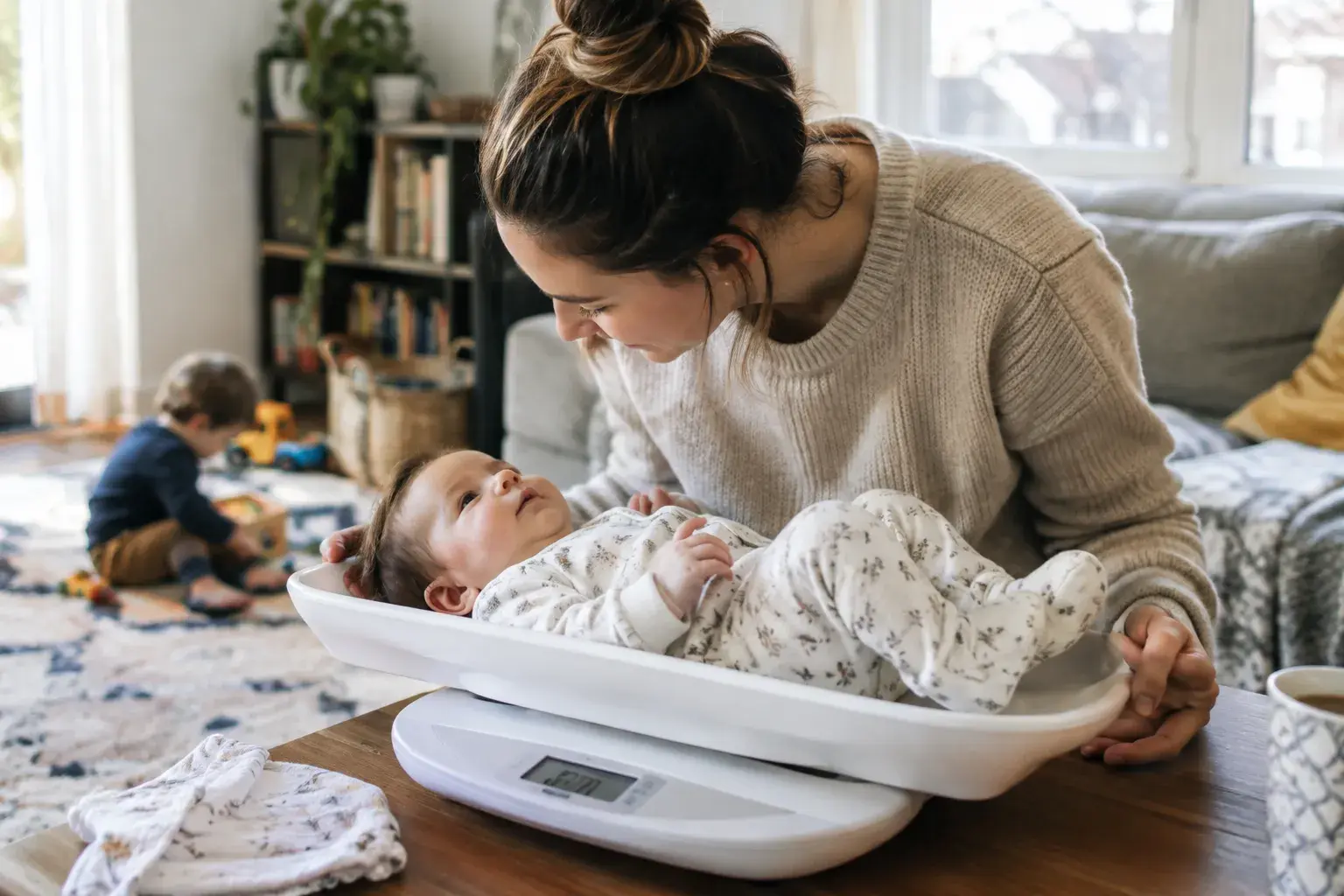
In general, you do not need to weigh or measure your child at home to keep track of their growth. These measurements are usually taken during appointments with a health professional and recorded on a growth chart. Weigh your child at home only if a health professional recommends it.
A child’s weight on its own does not tell the whole story. A health professional can put different measurements in context and consider your child’s own growth pattern. If you have concerns about your child’s growth, talk to the person who follows their health or call Info-Santé at 811 in Quebec. The Mieux vivre guide says that weighing or measuring a child at home is not necessary unless a health professional recommends it.
How is a child’s growth tracked?
Over time, a health professional measures your child’s weight and length or height. They may also measure head circumference. The results are recorded on a growth chart, which helps the professional look at how your child is growing at different points in time. The purpose is not to judge one measurement against another baby of the same age.
Every child grows at their own pace. Several factors, including feeding and genetics, influence growth. Some babies have periods of faster growth around 7 to 10 days, 3 to 6 weeks, and 3 to 4 months. These growth spurts do not happen at the same time for every child. They are not a schedule for weighing your baby at home.
Appointments are also a chance to ask questions about growth, feeding, or development. The Mieux vivre page about consulting a health professional for your child explains more about these visits. You can bring up anything you have noticed, even if you are not sure whether it is important.
Why can home weigh-ins be confusing?
A measurement taken at home does not replace measurements taken over time and interpreted as part of your child’s health follow-up. The way a measurement is taken matters, too. A scale or measuring tape at home may not give the same result as the equipment or method used during an appointment. So, a difference between two numbers by itself cannot tell you whether your child’s growth is on track.
Children come in different sizes and shapes. The Canadian Paediatric Society notes that changes in a child’s height and weight generally follow that child’s own pattern. Comparing your child with another baby, focusing on a single number, or taking an unplanned measurement can cause worry without answering the question you have about your child.
If a health professional asks you to weigh your baby at home, ask which scale to use, how often to take a measurement, and how to record the results. Do not add more frequent weigh-ins than they recommended. If you are unsure what to do, call the clinic or your CLSC and ask for clarification. You do not need to guess at a method or create your own schedule.
What can you keep track of between appointments?
You can keep notes that will help you ask questions, without turning everyday life into a series of measurements. For example, you might record:
- the appointment date and the name of the clinic or health professional;
- measurements shared with you, such as weight or length or height;
- any instructions for follow-up, including a request to take a measurement at home;
- questions or observations about your child’s feeding and well-being; and
- changes you have noticed and when they began.
Write down measurements as they were given to you, along with the date. If you took a measurement yourself at a health professional’s request, note that, too. This helps anyone reviewing your notes tell the difference between a measurement taken at a clinic and one taken at home.
Bring your notes to the appointment, along with your child’s health record if you have it. You do not have to calculate a growth chart or interpret the results yourself. Ask the health professional what the measurements mean for your child and whether they recommend any particular follow-up. If you have several questions, writing them down beforehand can help you remember to raise them during the visit.
When should you ask for advice?
If you are concerned about your child’s growth, you do not need to wait until you have a series of home weigh-ins before speaking up. Contact the health professional who follows your child or your CLSC. Regular appointments are one place to discuss your child’s health and development. Bring your questions and any notes you have kept.
If your child is unwell, or you are worried and unsure where to turn, call Info-Santé at 811 in Quebec to speak with a nurse. For an emergency, call 911. In other provinces and territories, use the health advice line available where you live. For questions about medication, speak with a pharmacist.
An app or notebook can help you find dates and observations again, but it cannot replace advice from a health professional. If you are unsure whether a measurement or change needs attention, explain what you have noticed and ask for guidance rather than trying to interpret a number on your own.
Frequently asked questions
Should I weigh my baby every week?
No, unless a health professional has recommended it. Growth is followed using measurements taken at different times.
What measurements are used to track growth?
Weight and length or height are measured. Depending on your child’s age, head circumference may also be measured and recorded on a growth chart.
My child is smaller than other children. Should I be worried?
Children’s height and weight vary. If you’re concerned, talk to the health professional who follows your child or call Health811 in your province or territory. In Quebec, call Info-Santé at 811.
What if a health professional asks me to weigh my baby at home?
Follow their instructions about how and when to take the measurement. If anything is unclear, ask them to explain.
This article is for information; it does not replace advice from a health professional. In Québec, call Info-Santé 811 when in doubt (elsewhere in Canada, your provincial health line). In an emergency, call 911.
Sources
- Is my child growing well?, Société canadienne de pédiatrie, Soins de nos enfants