Prenatal care
Caffeine during pregnancy: Health Canada’s limit
Coffee, tea, soft drinks, chocolate: caffeine comes from many sources. Health Canada recommends no more than 300 mg a day during pregnancy. Here is what that means in cups, and where caffeine hides.
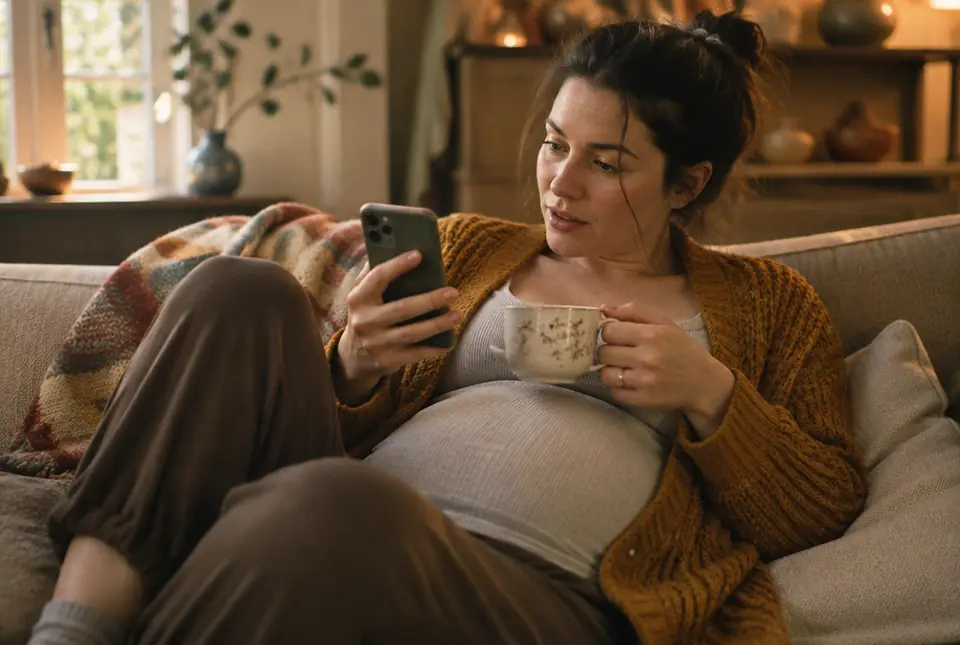
How much caffeine is OK during pregnancy?
Health Canada recommends that people who are pregnant, or planning to be, consume no more than 300 mg of caffeine a day from all sources. Québec’s public health guide puts it this way: about two 237 ml (8 oz) cups of brewed coffee, or three 30 ml espressos. The real amount varies a lot with the coffee, the cup size and how it is made.
Why limit caffeine in pregnancy?
According to Canada’s national maternity care guidelines, excessive caffeine during pregnancy is linked to a higher risk of miscarriage and slower growth of the baby. Staying under the limit lets you keep your morning coffee without going over.
Where is caffeine hiding?
Coffee is not the only source. Count these too:
- tea, black or green, and iced teas and coffees;
- some soft drinks, such as colas;
- chocolate, especially dark chocolate;
- some over-the-counter medicines, for colds or pain for example;
- guarana and yerba mate, found in some drinks.
Energy drinks and decaf
Québec’s public health institute (INSPQ) advises against energy drinks in pregnancy: they can contain more caffeine than coffee, plus ginseng and taurine, whose safety in pregnancy has not been shown. Decaf coffee and tea are fine. For herbal teas, some plants are not recommended: ask your pharmacist.
Cutting back on caffeine without headaches
If you drank a lot of coffee before pregnancy, cut back gradually, for example by swapping one cup for decaf or choosing a smaller cup. Drinking water regularly also helps prevent headaches and fatigue.
What is worth tracking in Maliah
If you want to track your caffeine for a few days, one voice note per cup in Maliah is enough to see where you stand. Nothing is calculated for you: it is a simple log you can show at your appointment.
Frequently asked questions
How many cups of coffee a day while pregnant?
Health Canada sets the limit at 300 mg of caffeine a day, about two 237 ml cups of brewed coffee.
Does tea have caffeine?
Yes, black and green tea contain caffeine, as do iced teas: they count toward the daily limit.
Are energy drinks allowed during pregnancy?
No, the INSPQ advises against them during pregnancy.
Is decaf coffee OK during pregnancy?
Yes, decaffeinated coffee and tea are fine.
Does chocolate count toward the caffeine limit?
Yes. Chocolate, especially dark chocolate, contains caffeine and counts toward your daily total, along with coffee, tea and some soft drinks.
Read next
- Foods to avoid during pregnancy: Health Canada’s list
- Pregnancy fatigue: understanding first-trimester exhaustion
- Headaches during pregnancy: what helps and when to get help
Related free tools
Other guides
Sources : INSPQ, Mieux vivre : Malaises de grossesse · INSPQ, Mieux vivre : Changements physiques pendant la grossesse · INSPQ, Mieux vivre : Signaux d’alarme pendant la grossesse · INSPQ, Mieux vivre : Suivi de grossesse · INSPQ, Mieux vivre : Grossesse à risque élevé (diabète de grossesse) · INSPQ, Mieux vivre : Reconnaître le début du travail · INSPQ, Mieux vivre : Les boissons pendant la grossesse (caféine, tisanes, eau) · INSPQ, Mieux vivre : Activités physiques pendant la grossesse · INSPQ, Mieux vivre : Sexualité pendant la grossesse · INSPQ, Mieux vivre : Médicaments et produits de santé naturels pendant la grossesse · INSPQ, Information périnatale : Santé mentale, ressources et liens utiles · INSPQ : Mieux vivre avec notre enfant de la grossesse à deux ans (guide 2026) · Québec.ca : Dépistage et offre de tests (Programme québécois de dépistage prénatal) · Santé Canada : Manipulation sécuritaire des aliments pour les personnes enceintes (2024) · Santé Canada : La caféine dans les aliments · Santé Canada : Calculateur du gain de poids pendant la grossesse · Santé Canada : Lignes directrices sur le gain de poids gestationnel · Agence de la santé publique du Canada : Guide pour une grossesse en santé · SOGC et SCPE : Lignes directrices canadiennes 2019 sur l’activité physique pendant la grossesse · Gouvernement du Canada : 9-8-8, ligne d’aide en cas de crise de suicide
Worried about your child’s health or your pregnancy? In Québec, Info-Santé 811 answers day and night; elsewhere, call your local health line. In an emergency, call 911. This article is for information; it does not replace advice from a health professional. In Québec, call Info-Santé 811 when in doubt (elsewhere in Canada, your provincial health line). In an emergency, call 911. Updated on November 7, 2026.